
Blanford St MaryChurch of England Primary School
Pastoral Support
Pastoral support aims to provide support that meets the differing needs of all children so that each individual is equipped with skills to cope with life. It supports children to meet their spiritual, mental , emotional and physical needs. It supports the school to maintain an atmosphere in which children feel secure, safe, loved and are encouraged in their personal, social and emotional learning.
We support and work alongside parents in addressing pastoral concerns which might be impacting on their child’s learning and development. We work with staff to ensure there is support for pupils and staff and to build upon the existing caring, loving and respectful relationships which are already in place between staff and children.
We provide support to individuals and groups of children: listening and talking to children who may need support with a variety of pastoral issues such as self-esteem and confidence, bereavement, managing feelings of stress and anxiety, separation, and developing social and friendship skills. We respond to situations as they arise on a day-to-day basis.
We meet with families to discuss their child and how best to support them pastorally. We work with outside agencies when appropriate to provide provision and support.
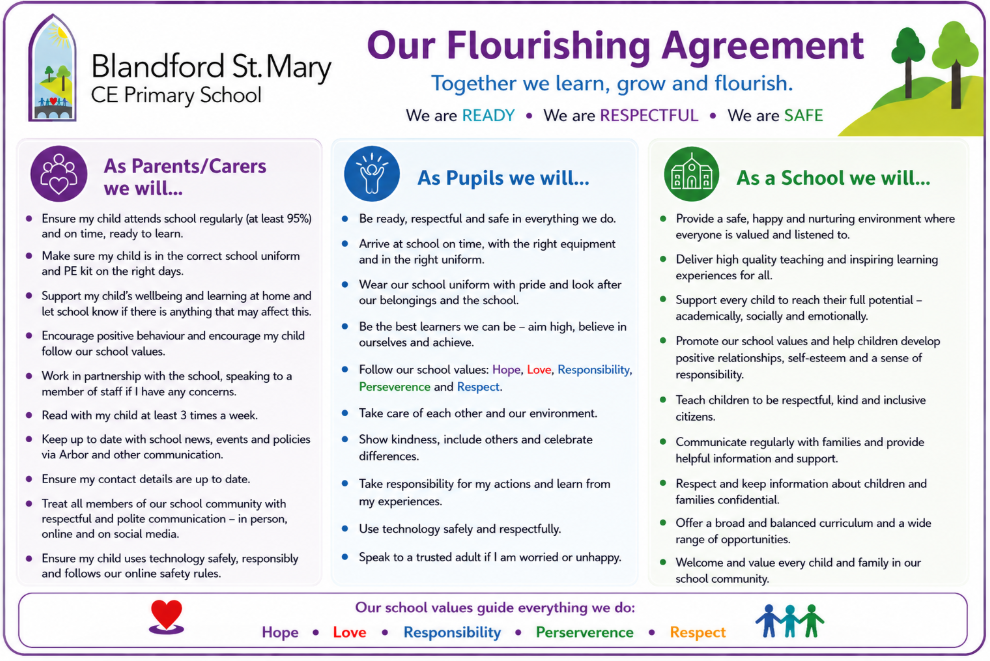
BSM Flourishing Agreement
Mental Health Support
https://camhsdorset.org/about-camhs/mental-health-support-teams-mhsts
Trying new or different coping strategies can help support your mental health and lower stress in a positive and interactive way.
If you have coping strategies that work well for you, keep doing them – whether that's mindfulness, walking or as simple as taking 5 minutes for yourself.
- Being physically active might help your mental health. It also helps boosts your immune system and can help encourage your children to exercise too. You could try walking, going for a jog or doing an online class. If these don't suit you, you could try a gentler activity like gardening, sitting next to an open window to get some fresh air or doing a crossword.
- Maintain a regular sleeping pattern if possible. The NHS have tips and advice to help.
- Keep in touch with family and friends on the phone or try a video call.
- It's important to be healthy and eat well. We know it's not easy for everyone, and if you need help with getting essentials you can contact your local food bank.
- Keep a journal. Writing down your feelings can help you reflect, understand and let go of emotions.
- Join a support group or network online. Talking to others in a similar situation can help. netmums.com offers forums for both mums and dads.
- Create mini zones in the home where possible, allowing everyone to have space. If this isn't possible, try spending set amounts of time in different rooms if you can.
- Try to have some time for yourself, whether that's within your home or by going for a walk. We have advice if you're not sure if your child is old enough to stay home alone.
- Managing how you keep on top of the latest news can help reduce anxiety. You could create limits on how much time you spend on social media and set 1 or 2 specific times of the day you check the news. Staying up to date can help you support children with any questions they may have but it's also important to take care of your own wellbeing.
- Making a plan of things to do by yourself or with your child can help create structure and a routine for the day. Try starting your day with a short list of 4 small, achievable things you'd like to do. If there's another adult in your house or older children, ask them to play an active part too. But, if you're struggling with your mental health and emotional wellbeing it's okay to do the best you can and recognise there will be good and bad days.
Support for parents
On this page, you will find links to support available for parents. Please follow the links provided to learn more.
https://service.actionforchildren.org.uk/dorset-services/parenting/
Action for Children offers information about the Incredible Years parenting courses. Follow the link to access the information page for parents and carers, where you can also self-refer. The page also includes details about a session called Behaviours That Challenge Us, which you can sign up for. The next session will take place on Tuesday 2nd June.
https://www.triplep-parenting.uk.net/uk/triple-p/
Triple P is a parenting course – whilst you may not want to do the actual program, it has lots of useful advice and articles.
https://families.barnardos.org.uk/
https://www.nspcc.org.uk/keeping-children-safe/support-for-parents/
Barnados and NSPCC offer valuable support for parents.
https://notfineinschool.co.uk/
On this site you will find information about supporting families and children when school attendance is a barrier to learning.
https://camhsdorset.org/about-camhs/mental-health-support-teams-mhsts
This link will also take you to the recordings of the webinars which MHST run for parents and carers.
https://www.coramfamilylives.org.uk/
Coram Family Lives provides support for families and parents through a range of services, including a national helpline, online chat, WhatsApp and email support, advice articles, free online parenting courses, and face-to-face support across England and Wales.
ELSA
At Blandford St Mary, Mrs Jerrard and Miss Carter are trained Emotional Literacy Support Assistants (ELSAs). ELSAs are specialists who support children with their emotional development and are trained and regularly supervised by Educational Psychologists within the local authority.
ELSA sessions can support a range of areas, including loss and bereavement, emotional literacy, self-esteem, social skills, friendships, relationships, managing strong feelings, anxiety, bullying, conflict, emotional regulation, growth mindset, and social stories.
Mrs Jerrard and Miss Carter work with children who are referred to them following discussions with parents and carers.
Healing Together

In addition to our ELSA provision, Mrs Flavell is trained as a Healing Together facilitator. The Healing Together programmes support children who are experiencing ongoing stress and anxiety, as well as those who are learning to manage strong emotions such as anger.
These trauma-informed programmes help children understand how big feelings affect their body, brain, and daily life. They are carefully designed to support children in developing strategies to feel safe and secure, so that overwhelming emotions do not negatively impact their wellbeing. The programmes also help children understand how their body and brain can work together to support feelings of calm and safety.
For parents and carers who would like to find out more, please see the videos below:
A video for parents who wish to know more about the Managing Angry feelings Healing Together programme for their child.
https://www.youtube.com/watch?v=IbvWWPmsucQ
This video will help parents and carers learn more about the Healing Together programme that supports children with anxiety and/or stress.